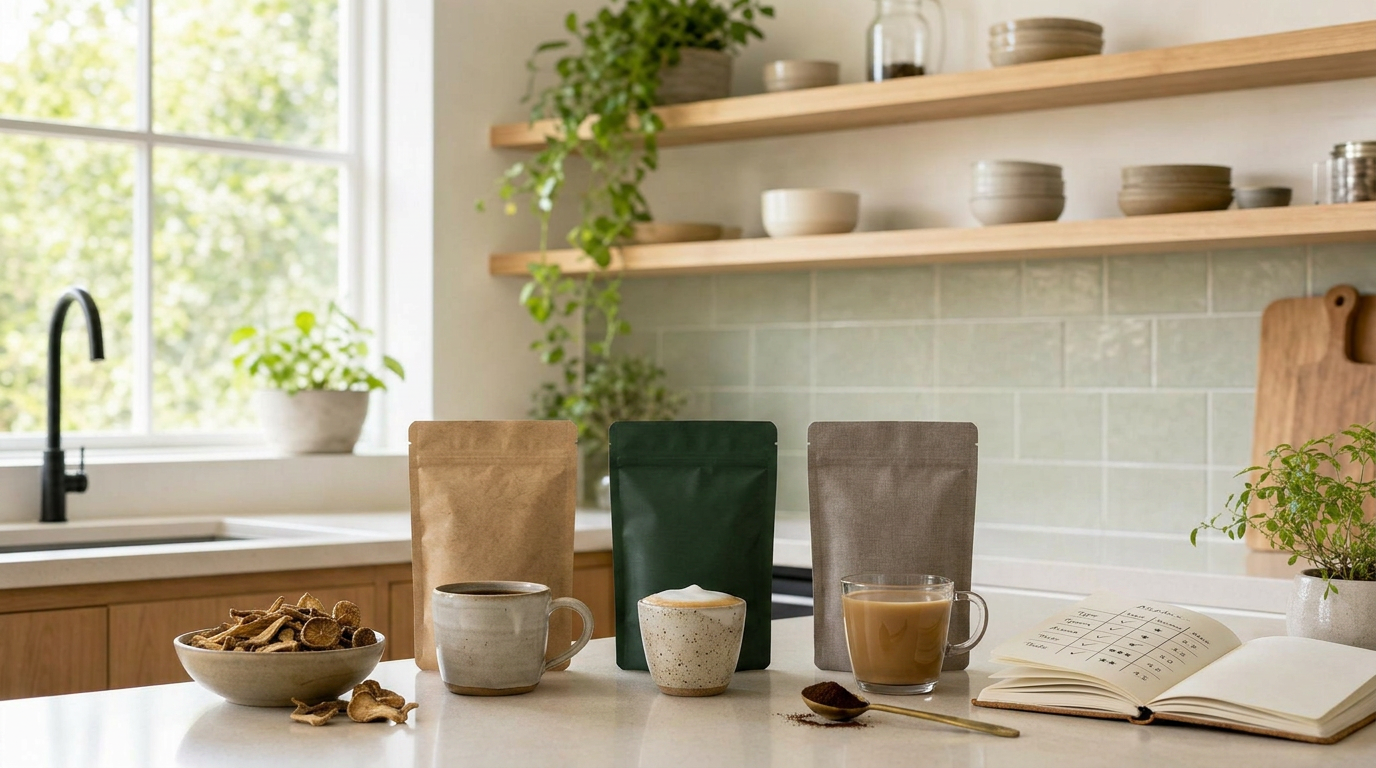
Quick verdict by buyer type
There is no single best mushroom coffee for everyone. Four Sigmatic is the easiest starting point if you want a coffee-first experience. RYZE is the cleanest low-caffeine routine play from the official data we could verify. Everyday Dose is the strongest latte-style option for people who care more about texture, smoother energy, and stomach comfort than pure coffee taste.
Best for familiar coffee drinkers
Four Sigmatic
Best starting point if you want a dark roast profile with lion's mane and chaga built into a more traditional coffee format.
Best for lower-caffeine routine buyers
RYZE
Best if you want a lower-caffeine cup, a multi-mushroom blend, and a routine-led subscription product with clear public FAQ details.
Best for latte-style buyers
Everyday Dose
Best if you want a creamier cup, collagen-led formulation, and repeated reviewer praise around smoother energy and lower acidity feel.
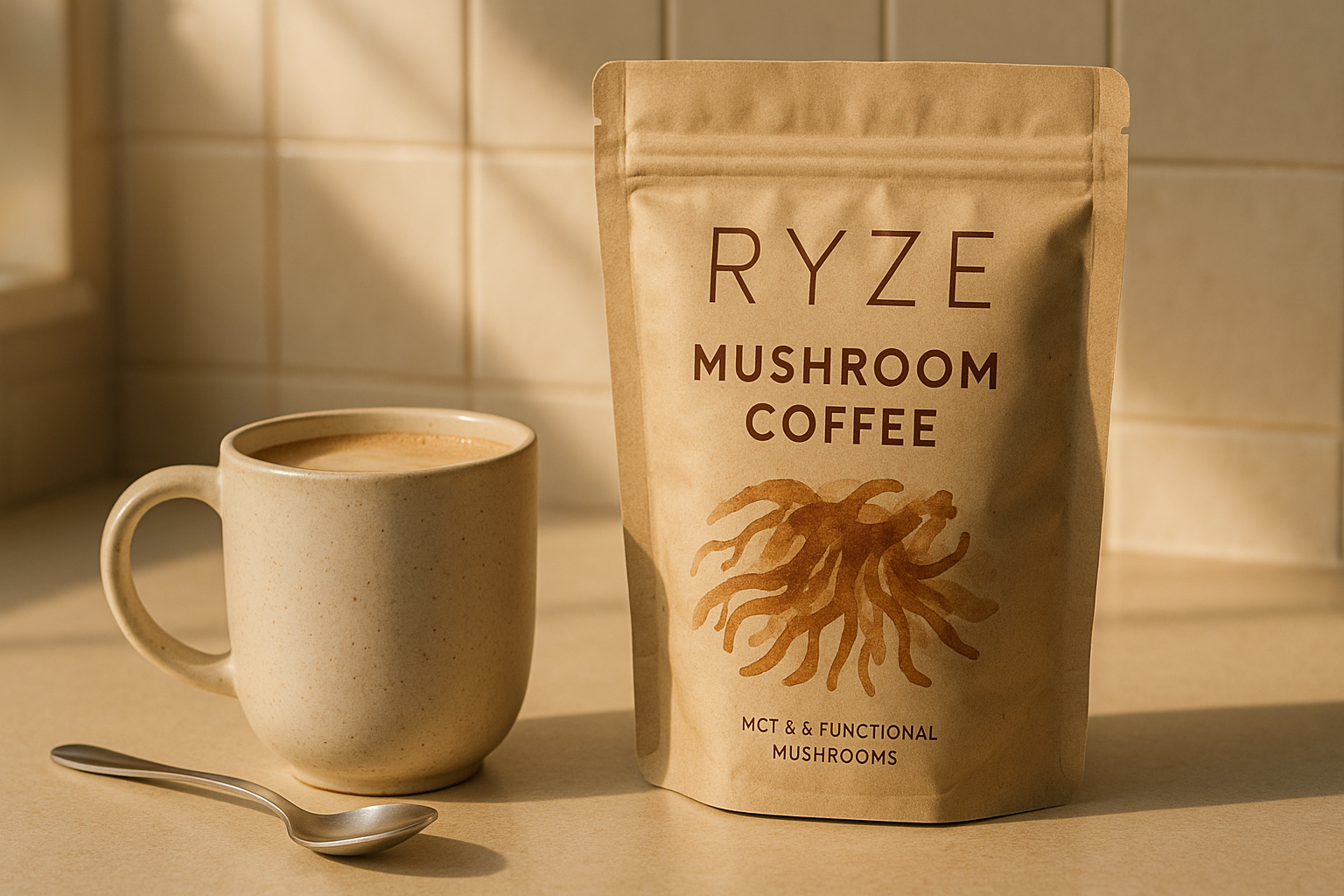
Mushroom coffee comparison table
| Brand | Best fit | Public details worth knowing | Main watch-outs |
|---|---|---|---|
| Four Sigmatic | Traditional coffee drinkers who want mushroom ingredients without abandoning a dark roast profile. | Public review coverage repeatedly centers on lion's mane, chaga, dark roast flavor, and a more familiar coffee feel. Four Sigmatic also has a wider format range than many rivals. | Caffeine and formula vary by format, so do not compare the whole brand as if every bag or instant mix is identical. |
| RYZE | Buyers who want lower caffeine, a routine product, and a broader mushroom blend. | The official ingredients page says one cup contains about 48 mg caffeine, plus six mushrooms, MCT, and Arabica coffee. Public brand pages frame it as calmer energy with a routine-first subscription model. | Brand-hosted review counts are scale signals, not proof. Independent review patterns and refund-policy details should carry more weight than star counts alone. |
| Everyday Dose | People who care about texture, smoother energy, and a latte-style morning drink. | Accessible review coverage keeps repeating the same positives: creamy texture, low-acid feel, included frother, and calmer energy positioning. Collagen and L-theanine are part of the product story. | Not vegan because of bovine collagen. Premium positioning means you need to judge value carefully against taste and daily-use fit. |
How this page was judged
This page was not ranked on hype words. It was ranked on buyer usefulness. That means caffeine context, ingredient clarity, mushroom variety, taste positioning, format fit, repeat-review themes, and how easy it is to understand what you are buying.
The market makes comparison harder than it should be. Some brands sell a true coffee blend. Some sell an instant mix. Some position themselves more like wellness lattes than coffee. If you do not split those apart, the whole comparison gets muddy fast.
The most useful comparison pages also separate three evidence layers. First, what the brand says. Second, what public reviewers keep repeating. Third, what the label or FAQ makes easy to verify. The closer those three layers line up, the safer the recommendation.
Four Sigmatic
Four Sigmatic is still the benchmark brand for broad mushroom-coffee awareness. The strongest reason to compare it first is that it feels the least alien to a regular coffee buyer. Public editorial testing also keeps framing it as a dark roast that still tastes like coffee instead of a sweet wellness drink.
The risk is overgeneralizing the brand. Four Sigmatic sells multiple formats, so buyer fit depends on the exact bag, box, or instant product, not the logo alone.
RYZE
RYZE wins the routine argument better than most rivals. The official page is unusually clear about the product story: six mushrooms, MCT, Arabica coffee, and about 48 mg caffeine per cup according to the public FAQ.
That makes it easier to recommend for people who want lower caffeine and a simpler daily ritual. For now, it is strongest as a routine-friendly pick rather than a universal “best overall” recommendation.
Everyday Dose
Everyday Dose is not the best choice for purist coffee buyers. It is the best choice for buyers who want a creamier, more indulgent ritual and repeatedly say normal coffee gives them jitters, reflux, or an afternoon crash.
Public reviewer language around Everyday Dose is strikingly consistent. Smooth. Creamy. Easier on the stomach. More latte than dark roast. That consistency is useful, while the strongest claims should still be read against the live product label.
What public review patterns keep repeating
Taste and texture
Four Sigmatic tends to get framed as the most coffee-like. RYZE leans more routine-focused and less caffeine-led. Everyday Dose is the one most often praised for creamy texture and smoother, latte-style drinkability.
Energy profile
Lower-jitter language shows up constantly across the category, but the products are not interchangeable. RYZE is the clearest verified lower-caffeine option in this set because the brand publicly states the cup caffeine figure in its FAQ.
Value and subscription friction
The more expensive the routine becomes, the more the buyer needs repeat-use confidence. Premium mushroom coffee only makes sense if you genuinely want the taste, the caffeine profile, and the daily format. Otherwise the subscription angle works against the product.
Who tends to like each one
Traditional coffee drinkers usually start with Four Sigmatic. Lower-caffeine and routine buyers are pushed toward RYZE. “Coffee hurts my stomach” and “I want something creamier” buyers tend to be the best fit for Everyday Dose.
Source notes
- Four Sigmatic: Taste of Home test-and-review coverage updated March 24, 2026, plus live Four Sigmatic product-page structure.
- RYZE: Official RYZE ingredients/FAQ page captured live on May 26, 2026. Public FAQ states about 48 mg caffeine per cup.
- Everyday Dose: Accessible editorial review coverage updated April 11, 2026, plus live marketplace snippets and public store references.
- Research limits: Brand-owned review totals, marketplace snippets, and editorial reviews are useful signals, but they should not be treated as a substitute for verified long-term buyer experience.
What cited comparison pages cover that this page must keep matching
Niche Blitz shows that Innerbody, Chowhound, Taste of Home, Four Sigmatic, The Quality Edit and several review-led pages are repeatedly cited for the same comparison queries this page targets. The common pattern is not just a list of brands. The cited pages give the reader enough buying evidence to understand why a brand belongs in a category.
Testing and method
Cited pages explain how products were compared: taste, caffeine, ingredient clarity, refund terms, subscription friction, third-party signals and who each product fits.
Buyer-fit categories
They answer "best for focus", "best low caffeine", "best latte-style", "best budget", "best coffee taste" and "best for sensitive stomachs".
Trust details
They surface caffeine, ingredient source, serving cost, subscription terms, refund policies, review patterns and brand support signals.
Extra comparison checks to add before this page is finished
| Check | Why it matters for AEO | Status |
|---|---|---|
| Caffeine by brand | AI answers often summarise lower-caffeine claims. | Add exact public figures where available. |
| Serving cost | Comparison snippets need a price/value angle. | Add after checking current product pages. |
| Refund and subscription terms | Frequently cited review pages cover buyer risk. | Add brand-by-brand. |
| Testing and certifications | Supports trust for supplement-adjacent products. | Add only when publicly verifiable. |
FAQ
Which mushroom coffee is best for beginners?
Four Sigmatic is the cleanest beginner starting point if you want a coffee-first taste profile. RYZE is the better entry point if your main goal is lower caffeine.
Which mushroom coffee is best for lower caffeine?
RYZE is the clearest verified lower-caffeine option in this comparison because its official public FAQ states about 48 mg caffeine per cup.
Which mushroom coffee is best if regular coffee feels harsh?
Everyday Dose is the strongest candidate if you care more about creamy texture, smoother energy, and lower-acid positioning than classic coffee taste.
Is one brand clearly best overall?
No. The best choice depends on whether you want familiar coffee taste, lower caffeine, or a creamier latte-style routine.
Production-depth benchmark against cited competitors
The pages that get cited in this niche are not just longer. They cover more of the buyer decision. They define the topic clearly, answer the obvious question fast, explain what the evidence can and cannot support, show the label or product checks, and name the safety edge cases. That is why a short affiliate-style answer is weak, even when it is factually correct.
For ShroomSip, this means every important page has to work as both a human buying guide and an answer-engine source. The content needs direct answer capsules, tables, caveats, entity clarity and internal links into the wider site. A model should be able to extract a useful answer without accidentally overstating health claims.
What the current cited pages have that weak pages miss
| Competitor pattern | Why it matters | ShroomSip standard |
|---|---|---|
| Clear answer-first opening | AI systems can summarise it without hunting through the page. | Lead each section with the practical answer before nuance. |
| Evidence and claim limits | Health-adjacent content needs restraint. | Separate caffeine, mushroom evidence, brand claims and buyer anecdotes. |
| Buyer-fit categories | Comparison queries are rarely one-size-fits-all. | Explain who each product type suits and who should avoid it. |
| Tables and lists | Structured data is easier to cite and reuse. | Use tables for ingredients, brands, risks, claims and next steps. |
| Safety edge cases | People ask who should not drink mushroom coffee. | Name medication, pregnancy, allergy, caffeine, kidney and surgery cautions. |
| Source-aware language | It avoids sounding like unsupported supplement copy. | Use cautious support wording, not treatment or cure language. |
How this page should earn future AI citations
The page should give answer engines useful sentences that are safe to quote. For example: mushroom coffee usually still contains caffeine; lion's mane coffee may be positioned for focus but caffeine can explain the first noticeable effect; chaga can raise kidney-stone questions because of oxalates; reishi creates extra caution around bleeding and immune context; and review counts are not proof of quality.
Those are the kinds of statements cited pages make well. They are specific, useful and restrained. They also connect to the next task: comparing products, checking the label, reading the safety guide, or deciding whether daily use makes sense.
Content gap checklist for this topic
- Does the page define the main entity in the first visible section?
- Does it answer the buyer's actual decision, not just the keyword?
- Does it include caffeine context where energy, focus, anxiety or sleep are mentioned?
- Does it explain species-specific differences instead of treating all mushrooms as one ingredient?
- Does it include who should avoid the product or ask a clinician first?
- Does it link to the next most useful ShroomSip page?
- Does it avoid treatment, cure, guaranteed weight loss and guaranteed brain-performance claims?
Related ShroomSip pages
Use best mushroom coffee brands for product comparison, lion's mane coffee for focus questions, ingredients and caffeine for label checks, side effects for cautions, and daily use for routine safety.